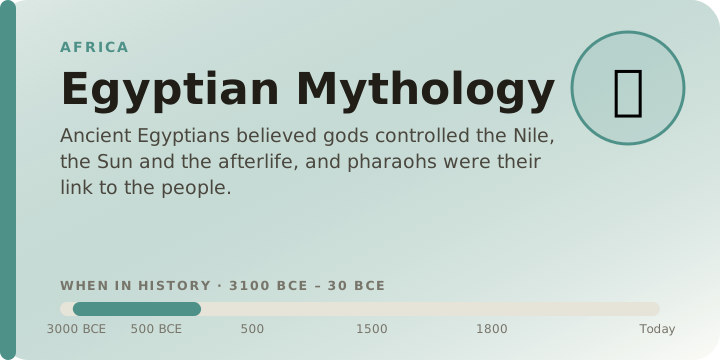
Egyptian Mythology is one of the most iconic and enduring mythological systems in history. It encompasses a vast pantheon of gods and goddesses, complex cosmology, and a profound influence on ancient Egyptian culture and religion.
Major Deities and Figures
- Ra (Re): The sun god, considered the creator of the world and a symbol of life and rebirth.
- Isis: The goddess of magic, motherhood, and fertility, known for her role in the Osiris myth.
- Osiris: The god of the afterlife, death, and resurrection, associated with the annual flooding of the Nile.
- Horus: The god of kingship and the sky, often depicted with the head of a falcon.
Creation Myths and Cosmology
- The Ennead: A group of nine deities in Heliopolitan theology, including Ra, Shu, and Tefnut, who played key roles in the creation of the world.
- The Story of Osiris: A central myth involving Osiris, Isis, Set, and Horus, symbolizing death, resurrection, and the eternal struggle between order and chaos.
Funerary Practices
- Egyptian mythology greatly influenced the funerary practices of ancient Egypt, including mummification, burial rites, and the belief in the afterlife.
- The Book of the Dead contains spells and instructions for the deceased’s journey in the afterlife.
Cultural Significance
- Egyptian mythology left a profound mark on Egyptian architecture, art, and hieroglyphic inscriptions found in temples, tombs, and monuments.
- Temples were dedicated to specific deities, and rituals and festivals celebrated their stories.
Influence Beyond Egypt
- Egyptian mythology had an enduring impact on neighboring civilizations, including Greece and Rome, leading to syncretism and the adoption of Egyptian deities like Isis and Serapis.
- The decipherment of hieroglyphs in the 19th century allowed for a deeper understanding of these myths.
Modern Interpretations
- Egyptian mythology continues to inspire writers, filmmakers, and artists worldwide, with themes of resurrection, divine kingship, and the eternal struggle between good and evil.
The Nile River
- The Nile River, central to Egyptian life, was personified as the goddess Hapi, representing the annual inundation that brought fertility to the land.