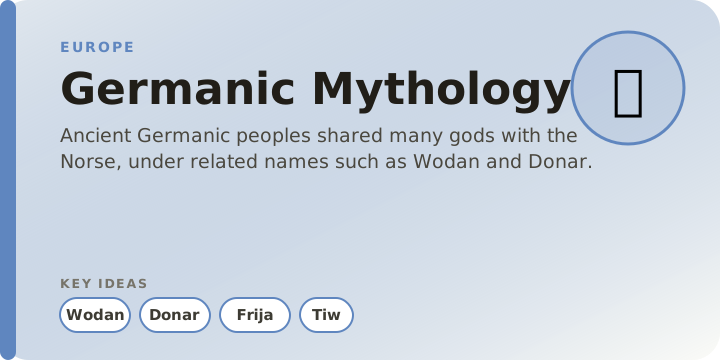
Germanic Mythology encompasses the myths, legends, and religious beliefs of the Germanic peoples, which includes the Norse, Anglo-Saxons, and other tribes that lived in what are now Germany, Scandinavia, and England. These myths form a significant part of the broader Indo-European mythological tradition.
Major Gods and Goddesses
- Odin: The Allfather, god of wisdom, war, and death. Also known as Woden or Wotan in Anglo-Saxon and Old High German.
- Thor: God of thunder, known for his hammer Mjölnir. Known as Donar in Old High German.
- Freyja: Goddess of love, fertility, and battle. Known as Frigg in some traditions.
- Tyr: God of war and law, known for his courage and the sacrifice of his hand to the Fenris wolf.
- Loki: The trickster god, known for his cunning and complex nature.
Mythological Stories and Sagas
- Creation Myth: Similar to Norse mythology, the Germanic creation myth involves the world being formed from the body of a giant.
- The Völsunga Saga: A legendary saga that was a significant source for Richard Wagner’s “Ring Cycle.”
- Beowulf: An Old English epic poem telling the story of the hero Beowulf’s battles against monsters.
Mythological Creatures
- Elves: Supernatural beings with magical powers and inherent beauty.
- Dwarves: Master craftsmen and miners of the underground.
- Giants: Often the adversaries of the gods and heroes in Germanic myths.
Cultural and Social Impact
- Germanic mythology heavily influenced the folklore and literary traditions of all Germanic-speaking countries.
- Many modern customs, words, and names in these regions have their roots in Germanic mythology.
Christianization and Its Effects
- With the Christianization of Germanic peoples, many myths were lost or transformed.
- However, elements of these myths survived in folk tales, medieval literature, and later in the Romantic and Victorian revivals of interest in Germanic mythology.